
Ed. note: Please welcome Renee Knake Jefferson back to the pages of Above the Law. Subscribe to her Substack, Legal Ethics Roundup, here.
Hello First Monday!
What is a “First Monday” edition? Every Monday here at the LER you receive a summary of the top ten legal ethics headlines. But, on the “First Monday” of the month, you get lots more — the headlines plus reading recommendations, legal ethics trivia, job postings, events, and other features.
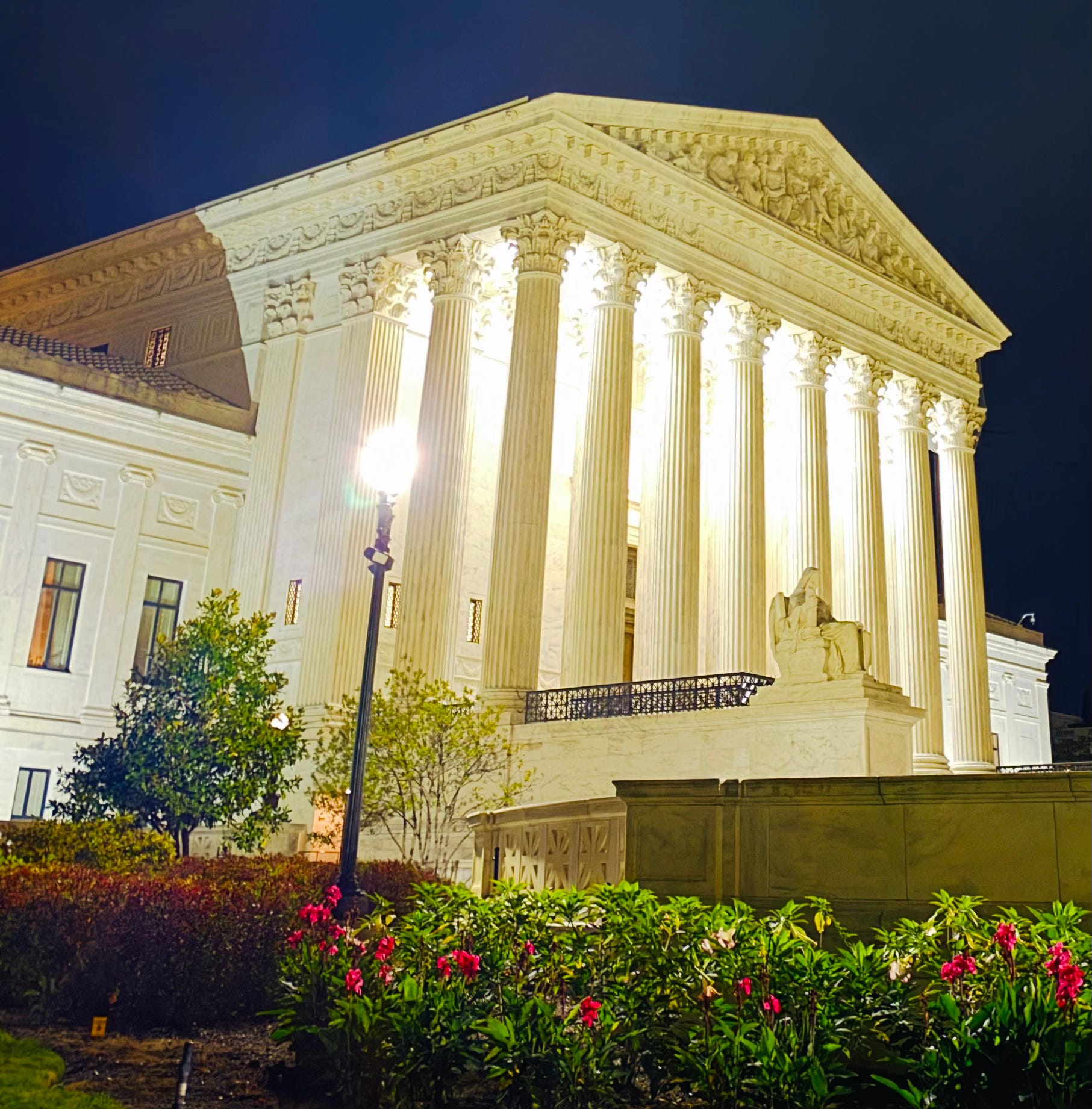
Last week took me from Texas to Atlanta to Detroit to Washington DC. The highlight was attending the American Inns of Court’s annual Celebration of Excellence at the U.S. Supreme Court. You can read about this year’s honorees here. And headline #1 below belongs to my co-author Keith Swisher (Arizona), who won the Warren E. Burger Prize for his scholarship examining the ethical challenges posed by artificial intelligence in the legal profession. Other awardees included Judy Perry Martinez, a former president of the American Bar Association (ABA) who received the 2026 Lewis F. Powell Jr. Award for Professionalism and Ethics, which is one of the highest honors bestowed by the American Inns of Court.
It was a welcome reminder, amid a week of headlines about ethical failures and institutional challenges, that the legal profession also has extraordinary individuals working to uphold its highest ideals.
Highlights from Last Week – Top Ten Headlines 📰
#1 Keith Swisher Wins the Warren E. Burger Ethics Prize. From the American Inns of Court: “Keith Swisher is the 2026 winner of the prestigious Warren E. Burger Prize, a writing competition sponsored by the American Inns of Court to promote scholarship in the areas of professionalism, ethics, civility, and excellence. [P]resented in October at the 2026 Celebration of Excellence at the Supreme Court of the United States, the award recognizes Swisher’s paper ‘The Moral Gaps in Legal Machines.’ The winning paper warns of the moral and ethical challenges inherent in the use of artificial intelligence in the legal world. On the plus side, Swisher writes, so-called ‘legal machines’ that can autonomously or semi-autonomously do the work of lawyers and judges could prove much more efficient and productive than humans. These machines will not, however, be ethical or accountable. The technology industry and its partners must address five key issues—legal machines’ lack of moral responsibility, inability to empathize, difficulties with new or challenging cases, lack of legal ethics, and lack of accountability—before they can ethically and competently take over the field of law. Until these concerns are addressed, Swisher argues, legal machines need to be kept under close human supervision.” Read more here.
#2 “Here Are the U.S. Attorneys Who Are Carrying Out Trump’s Grievance Agenda.” From The New York Times: “Together, they have pursued cases against the president’s enemies and protesters and amplified false claims of widespread election fraud, often citing thin evidence.” Read more here (gift link).
#3 “NYSBA Releases In-Depth Guidelines To Advise Attorneys on Ethical Use of AI.” From the New York State Bar Association: “Guidelines on artificial intelligence approved by the New York State Bar Association will help avoid the unauthorized practice of law, ensure that legal decisions are in human hands, and reduce bias in legal proceedings. On Saturday, the New York State Bar Association’s governing body, the House of Delegates, adopted the report ‘Legal Ethics Guidelines for Lawyers’ Use of Artificial Intelligence.’” Read more here.
#4 “What Does the Weil Gotshal Implosion Mean for the Law-Firm Industry?” From The Wall Street Journal: “The turmoil at Weil, Gotshal & Manges has led its leaders to wind down the law firm. They took the steps as the firm hemorrhaged top lawyers and had no clear succession plan after its incoming chair declined to step into the role.” Read more here (gift link).
#5 “Judge Wants to Know if Trump Attorneys Violated Ethics in One of 2 Cases to Change D.C. Landscape.” From the Los Angeles Times: “A federal judge said Friday she would open a ‘formal inquiry’ to investigate if attorneys for the Trump administration violated ethical boundaries during a legal dispute about a golf course project — one in a pair of plans that are revealing the breadth of the president’s attempts to mold parts of the District of Columbia to his own vision.” Read more here.
#6 “Trump Wants to Kick ‘Rogue Activist Judges’ Off Cases. Can He?” From The New York Times: “A Supreme Court decision and ethics opinions give judges room to speak their minds.” Read more here (gift link).
#7 “Former House Speaker Asks AG to Probe UNH Law Judicial Ethics Conference.” From the Manchester Herald: “Rep. William O’Brien claims the event scheduled for Nov. 10 provides improper aid to Democratic candidates ahead of the governor’s race.” Read more here.
#8 “Dozens of Past U.S. Judges Defend Minnesota Bench Against Federal Ethics Complaint.” From The Minnesota Star Tribune: “The Department of Justice filed the complaint alleging misconduct by Minnesota federal judges. A group of their former colleagues from across the U.S. say it’s baseless.” Read more here.
#9 “Texas Judge’s Racial Comments to Lawyer Sparked Investigation.” From Bloomberg Law: “A lawyer’s misconduct complaint against US District Judge Ada Brown stemmed from a hearing during which she repeatedly directed racial insults at him, according to documents reviewed by Bloomberg Law.” Read more here.
#10 “Trump Administration Unlawfully Fired Maurene Comey, Judge Rules.” From The New York Times: “A Manhattan judge on Monday ruled that Maurene Comey, a former federal prosecutor and the daughter of one of Mr. Trump’s best-known critics, was unlawfully fired last year. In a 55-page ruling, Judge Jesse M. Furman of Federal District Court in Manhattan wrote that the Justice Department violated the separation of powers, federal administrative law and Ms. Comey’s due process rights when it fired her in July 2025.” Read more here (gift link).
Recommended Reading 📖
“The Ethics of Trademark Policing” by Jon Lee (Oklahoma). From the abstract:
Aggressive policing of trademark rights, often called “trademark bullying,” is widely seen as a significant problem that impacts both the targets of bullying and the public’s interest in fair competition. Accordingly, we might assume that lawyers who advise or assist their clients in such enforcement efforts must be acting unethically. Is that true? And, if so, why has nothing been done about it?
This Article comprehensively examines the ethics of engaging in trademark policing, given the competing obligations that lawyers owe to clients, third persons, and tribunals. The Article demonstrates that, in most instances, actions that might be considered “trademark bullying” do not run afoul of the Model Rules of Professional Conduct, even if they may produce undesirable consequences. In fact, a lawyer at times must carry out these enforcement efforts to fulfill their ethical obligations to clients. This counterintuitive proposition stems from three sources: trademark doctrine, which encourages trademark holders to police their own marks; the uncertainties of trademark litigation, which make it nearly impossible to know when a claim of infringement or dilution is frivolous; and the Model Rules, which set such a low bar for avoiding disciplinary intervention.
Yet there are limits. In certain situations, aggressive trademark policing may cross ethical lines. The Article explains why courts and state disciplinary agencies are not equipped to regulate this type of misconduct when it occurs, and it suggests an alternative solution that leverages the authority and expertise of the United States Patent and Trademark Office.
“The Duty to Disobey Unethical Orders: Lawyers and the Rule of Law” by Ray Brescia (Albany). From the abstract:
Members of the legal profession have an affirmative duty to refuse unethical directives and report professional misconduct, a responsibility analogous to the military’s obligation to disobey illegal orders. This duty is premised on the fact that lawyers function as fiduciaries, not just for their clients, but for the legal system itself. This Article outlines the legal profession’s obligation to adhere to two “imperatives,” what it calls the “rule-of-law imperative” and the “independence imperative,” embedded within the Model Rules of Professional Conduct and associated professional obligations that require that lawyers reject instrumental manipulations of the law that subvert democratic institutions. The Article examines three case studies to illustrate the fragility of these professional obligations in the face of political pressure: the whistleblowing and subsequent termination of DOJ attorney Erez Reuveni, who refused to sign a frivolous brief or support the Trump Administration’s willful defiance of court orders regarding mass deportations; recent instances of private law firm capitulation, describing how such firms, under threat of executive retribution against them and their clients, entered into settlement agreements that restricted their future practice and compromised their independence; and the advocacy on the part of several lawyers who sought to overturn the results of the 2020 election. This Article views these case studies in light of the rule-of-law and independence imperatives and proposes a reform agenda designed to promote both.
Get Hired 💼
Did you miss the 600+ job postings from previous weeks? Find them all here.
Associate Director of Assessment Development, National Conference of Bar Examiners — Madison, WI. From the posting: “The Associate Director of Assessment Development oversees the creation of content and the construction of assessment forms for one or more of NCBE’s assessment programs, with a main focus on the Multistate Professional Responsibility Examination.” Salary range from $127,000 – $158,000. Learn more and apply here.
Conflicts Attorney, Ashurst Perkins Coie — Multiple Locations. From the posting: “The Conflicts Attorney will independently review, research, and resolve conflicts issues related to firm new business and staff personnel and ensure compliance with ethical standards in all jurisdictions as well as firm policies.” Salary range from $158,120 to $322,710 depending on location. Learn more and apply here.
Office of General Counsel – Conflicts and Ethics, Latham & Watkins — Chicago and Other Locations. From the posting: “This role will be responsible for resolving professional ethics conflicts and related compliance issues by applying legal ethics rules, professional responsibility principles, Latham & Watkins policies, and practical judgment to lateral clearances, new business matters, outside counsel guidelines, engagement terms, waivers, ethics walls, and related risk-management issues, while coordinating with partners, Ethics Committee Members, and other stakeholders to resolve conflicts issues, communicating status updates and following through until the matter is resolved or appropriately escalated.” Salary range from $170,000 – $200,000. Learn more and apply here.
Professional Responsibility Counsel, Foley & Lardner — Madison, Milwaukee, Chicago, New York, Washington DC. From the posting: “The Professional Responsibility Counsel (“PRC”) is a staff lawyer who facilitates the firm’s compliance with ethics and regulatory requirements. The PRC is a member of the administrative management team and is a practicing lawyer whose sole client is the firm. A successful candidate will have demonstrated understanding of the Model Rules of Professional Conduct; understanding of conflicts of interest rules, including the ability to identify conflicts and determine appropriate resolution; and strong legal research and writing skills with an ability to translate legal requirements into operational process.” Salary range from $130,900 to $235,700, depending on location. Learn more and apply here.
Keep in Touch 📝
- News tips? Announcements? Events? A job to post? Reading recommendations? Email legalethics@substack.com – but be sure to subscribe first, otherwise the email won’t be delivered.
Renee Knake Jefferson holds the endowed Doherty Chair in Legal Ethics and is a Professor of Law at the University of Houston. Check out more of her writing at the Legal Ethics Roundup. Find her on X (formerly Twitter) at @reneeknake or Bluesky at legalethics.bsky.social.
The post Legal Ethics Roundup: Can AI Be Ethical?, DOJ Lawyers Under Scrutiny, Weil Gotshal Implodes, ‘Rogue Activist Judges,’ Reading Recommendations, Jobs & More appeared first on Above the Law.
from Above the Law https://ift.tt/3pjYTO9
via IFTTT